
How do porta potties work day to day?
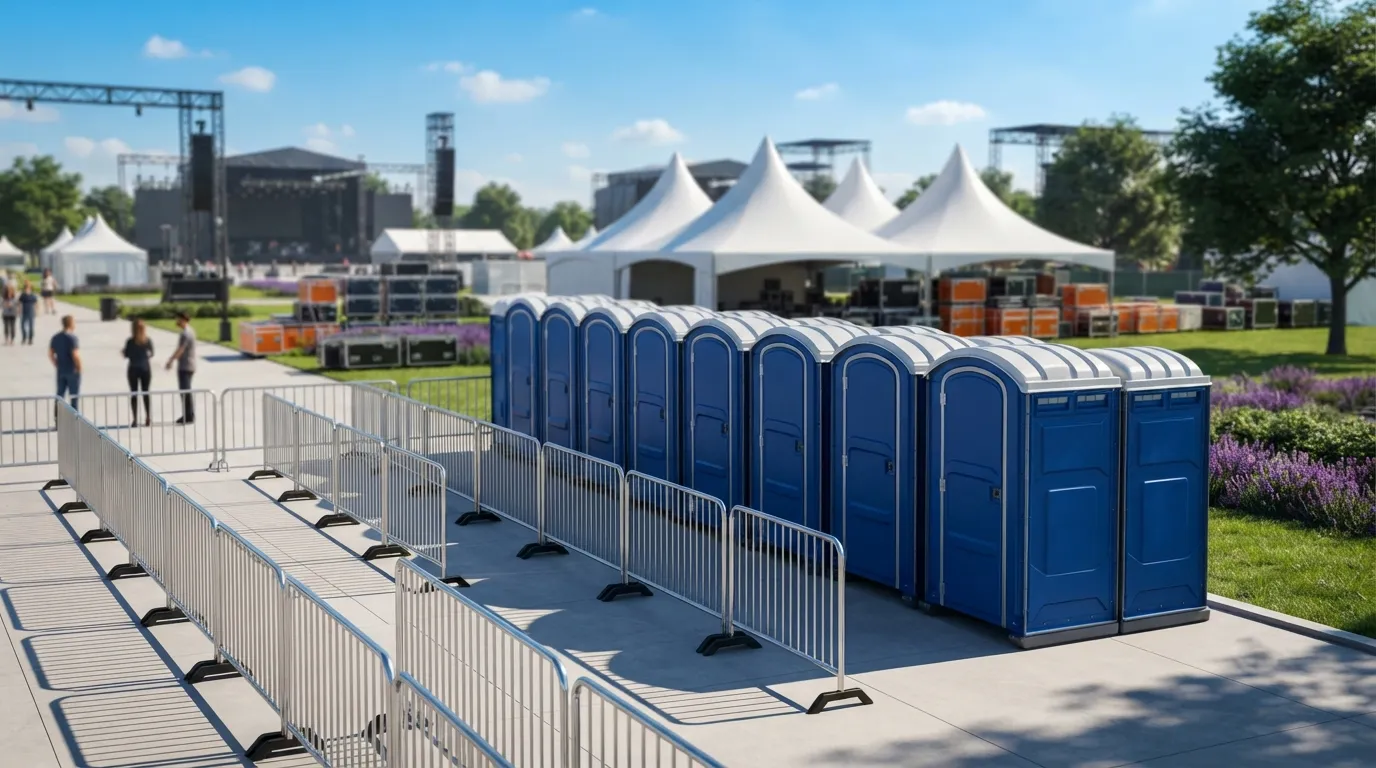
The basic unit is simple. A holding tank sits under a molded seat, and the whole standard porta potty rental footprint runs about 44 by 48 inches on the ground and stands roughly 92 inches tall. There is no water tank feeding it. Instead, a blue chemical deodorizer in the tank breaks down waste and knocks down odor between services. On a construction site in Hemet, a worker walks over, uses the unit, and the chemical does its job until the service truck arrives. ANSI/PSAI Z4.3, the industry sanitation standard, sets a baseline of one service visit per week for up to 10 users over a 40-hour week, though busier sites need more frequent stops. Ventilation vents near the roof keep air moving through the tank. Between visits, Hemet Porta Pros technicians rinse, restock toilet paper, and recheck the chemical level. If you are trying to figure out how many you need for a crew or an event, the how many porta potties do I need guide walks through the math, and OSHA's own ratios are laid out on the OSHA portable toilet requirements page.
How do flushable porta potties work?
A deluxe or flushable unit adds a small fresh-water reservoir and a foot pump or hand lever that pushes a measured rinse into the bowl after each use, instead of relying only on the holding tank below. The waste still collects in a tank, just like a standard unit, but the flush cuts down on odor and buildup between services. These units cost more to rent because they carry more equipment to maintain: check the deluxe flushable porta potty page for what is included. They show up often at weddings and upscale events where guests expect something closer to a real bathroom. For an ADA-compliant version with a lift-assist bar and a 60-inch turning circle per ADA Standards 304.3.1, see the ADA accessible porta potty option, which also meets the 32-inch minimum door width called out in ADA Standards 404.2.3.
How does a portable sink work?
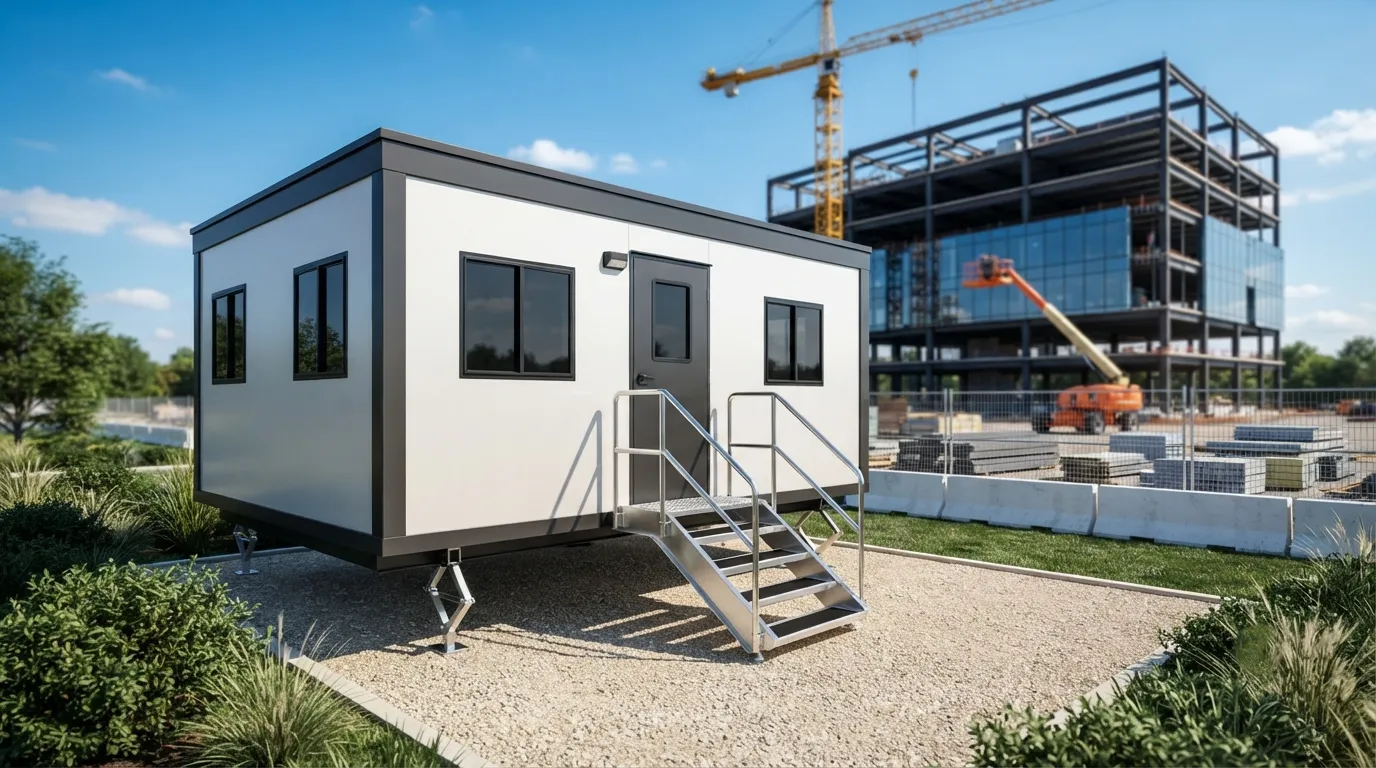
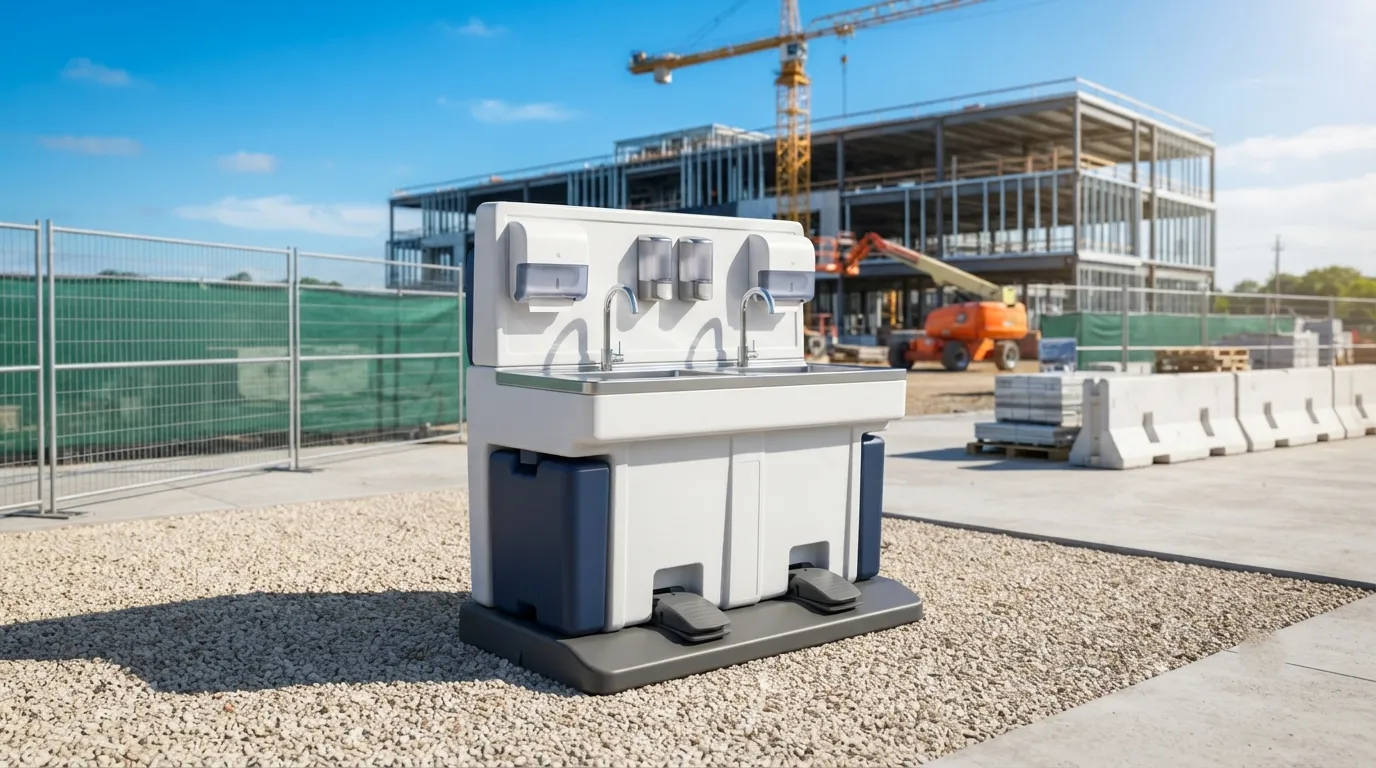
A portable sink runs on a self-contained system: a fresh-water tank feeds the faucet, either by foot pump or battery pump, and a separate gray-water tank underneath catches the runoff. No hookup to a building is needed. Soap and paper towel dispensers mount on the unit, which matters because 29 CFR 1910.141(d)(2) requires washing facilities to be stocked with soap and towels or a hand-drying device, not sanitizer alone. On food truck lots and job sites around Hemet, these get paired with restrooms to round out a hygiene setup. Full details are on the portable sink rental and handwashing station rental pages. Note that OSHA 1926.51(f)(1) specifically requires washing facilities where workers apply paints, coatings, herbicides or insecticides, so a painting crew needs a sink on site, not just a toilet. General toilet counts instead fall under OSHA 1926.51(c)(1). If you just need a low-cost sanitizing option rather than full handwashing, look at the hand sanitizer station rental page, though it does not satisfy the soap-and-towel rule.
Why do porta potties need chemicals and pumping?
The chemical does two jobs: it breaks down solid waste biologically and it masks odor with a scent additive, usually the blue liquid people associate with the units. Without it, a tank sitting in Hemet heat turns unpleasant fast. That is a different system from a home septic tank, which is usually pumped every 3 to 5 years depending on tank size and household size, versus a porta potty tank serviced weekly. Grease interceptors follow yet another rule: they get pumped once fats, oils, grease and solids reach 25 percent of the liquid depth. If your question is really about a house or restaurant system rather than a rental unit, the septic pumping service and grease trap pumping pages cover that separately, and septic tank warning signs explains when a tank is overdue. For camping trips, the same chemical-and-tank system applies, just scaled down. See camping porta potty for portable options that pack into a trailer or truck bed. Hemet's dry climate means chemical breaks down slightly faster than in humid regions, so route techs check levels rather than guessing.
Frequently Asked Questions
Do porta potties smell if maintained on schedule?
Not much, if the chemical is fresh and pickup happens on time. Odor spikes when a tank sits past its service date or in direct sun for days without shade. Weekly service, per the ANSI/PSAI Z4.3 baseline, keeps most units in check. See do porta potties smell for what affects that.
How often are porta potties cleaned?
Standard rentals get serviced roughly once a week under typical use, more often on high-traffic construction sites or multi-day events. Hemet Porta Pros adjusts frequency based on headcount. Full scheduling detail is on the how often are porta potties cleaned page.
What chemicals go in a porta potty tank?
A blend of deodorizers and biological or formaldehyde-based breakdown agents, added at each service to control odor and start breaking down solids before pumpout. Homeowners searching for portable toilet chemicals near me are usually looking for the same commercial-grade product technicians already use on route.
Can a construction worker use a porta potty without water on site?
Yes. The unit is self-contained, so no water hookup is needed for the toilet itself. But OSHA 1926.51(a)(1) still requires potable water at the site generally, and 1926.51(f)(1) requires washing facilities specifically after paint, coating, herbicide or insecticide work.
How far can a porta potty be from the work area?
There is no fixed OSHA distance for construction, though field sanitation rules under OSHA 1928.110 for agricultural labor set a quarter-mile walk limit. For placement logistics near East Hemet, 3.7 miles away, or San Jacinto, 4.3 miles north, see the porta potty placement guide.
Next step
Get a delivery date
Tell us the address, the dates and the headcount. We size the order and confirm the route.